Texans Land Veteran RB David Montgomery in Trade with Lions
- Chris Nalls

- Mar 2
- 4 min read
The Houston Texans made a bold move to strengthen their early-down offense by acquiring veteran running back David Montgomery from the Detroit Lions. Montgomery’s 2025 season showcased remarkable efficiency on limited touches, offering a clear path for revitalizing Houston’s ground game.
This trade not only addresses Houston’s need for a reliable back but also supports their young quarterback, C.J. Stroud, with a proven pass protector. Let’s explore how Montgomery’s skill set fits Houston’s offense, the challenges surrounding his acquisition, and what this means for the Texans moving forward.
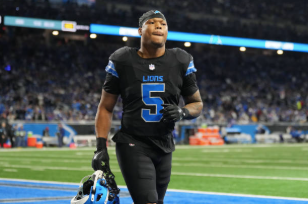
Photo by Nic Antaya/Getty Images
Montgomery’s Elite Efficiency and Reliability
David Montgomery’s 2025 season was defined by his ability to make the most out of every opportunity. Despite a reduced workload, he delivered impressive results that put him among the league’s top backs in several key metrics.
Rushing Yards Over Expected (RYOE): Montgomery gained 125 yards more than expected, ranking him in the top 20 among NFL running backs.
Yards After Contact: He averaged 3.17 yards after contact per attempt, a significant upgrade from Houston’s previous average of 2.5 yards after contact, which ranked last in the league.
Rushing Success Rate: His rushing success rate ranged between 43.0% and 49.3%, placing him in the high-efficiency category.
Touchdown Production: Even as a secondary option behind Jahmyr Gibbs, Montgomery tied for 12th in rushing touchdowns with eight scores in 2025. Over the past three seasons, he has found the end zone 33 times.
Pass Catching Reliability: Montgomery caught 29 passes last season without a single drop, making him one of the most dependable receiving backs in the league.
Pass Blocking: His pass blocking efficiency is very good, a crucial skill for protecting rookie quarterback C.J. Stroud.
Montgomery’s ability to gain yards after contact and his reliability in the passing game provide Houston with a versatile weapon. His touchdown production also shows he can be trusted in goal-line situations, an area where the Texans struggled in recent years.
Concerns About Age and Cost
While Montgomery’s efficiency is impressive, there are valid concerns about his age and the cost Houston paid to acquire him.
Declining Volume: Montgomery’s carries have steadily decreased over the past three seasons, dropping from 15.6 attempts per game in 2023 to just 9.3 in 2025. This trend raises questions about his durability and whether he can handle a larger workload.
Trade Price: Houston gave up offensive lineman Juice Scruggs, along with fourth and seventh-round picks, to acquire Montgomery. Some critics view this as an overpay for a running back who will turn 29 in June.
Contract Impact: The Texans inherit a cap hit of around $6 million for 2026 and around $9 million for 2027, which is not a significant financial commitment for a position that often sees high turnover.
These factors suggest that Houston is betting on Montgomery’s ability to maintain his efficiency and provide veteran leadership rather than expecting him to be a workhorse back.
How Montgomery Fits Houston’s “Stroud Support” Strategy
The Texans’ decision to bring in Montgomery aligns with their broader strategy to support their young quarterback, C.J. Stroud, and improve their offense’s efficiency.
Replacing Ineffective Production: Houston’s 2025 lead back, Woody Marks, averaged just 3.6 yards per carry, well below Montgomery’s 4.5 yards per carry. This upgrade should help the Texans gain more consistent yardage on early downs.
Pass Protection: Houston’s offensive line was widely criticized as the team’s biggest weakness in 2025. Montgomery’s reputation as a strong pass protector offers immediate help in keeping Stroud upright and giving him more time to make plays.
Mixon’s Departure: The trade signals the end of Joe Mixon’s tenure with Houston, as the team is expected to release him soon. Montgomery’s arrival fills the void with a player who can contribute both on the ground and in pass protection.
By adding Montgomery, the Texans aim to create a more balanced offense that can sustain drives and reduce pressure on Stroud. His veteran presence and skill set fit well with Houston’s goal of building a reliable, efficient offense around its young quarterback.
What This Means for Houston’s Offense
Montgomery’s arrival offers Houston a blueprint for improving its early-down offense. His ability to gain yards after contact and convert short-yardage situations can help the Texans sustain drives and control the clock. His pass-catching reliability adds another dimension to the offense, allowing Stroud to rely on a dependable outlet in the backfield.
The Texans finished 29th in red-zone touchdown success rate in 2025. Montgomery will help turn this around for Houston, as he has produced 33 touchdowns over three seasons, compared to Houston's 31 over the last three years.
The Texans will need to manage Montgomery’s workload carefully, given his age and recent decline in touches. However, his presence should immediately improve Houston’s rushing success rate and provide much-needed stability in pass protection.
This trade also shows Houston’s commitment to building around Stroud by surrounding him with players who can support his development. Montgomery’s veteran savvy and versatility make him a valuable piece in this puzzle.
Final Thoughts
To make this trade a resounding success for the Houston Texans, the front office—led by the aggressive Nick Caserio—must prioritize fortifying the offensive line through a combination of free agency signings and strategic selections in the upcoming NFL Draft.
David Montgomery, the newly acquired running back from the Detroit Lions, brings a proven, physical running style that thrives on tough, between-the-tackles carries and powers through contact. His arrival signals a clear intent to rebuild a more balanced, ground-oriented attack around C.J. Stroud.
Caserio has already shown his willingness to act decisively, as evidenced by the recent trade that sent offensive lineman Juice Scruggs (along with draft picks) to Detroit in exchange for Montgomery. That same proactive mindset will be essential moving forward: Houston needs to pursue high-caliber free-agent offensive linemen who can immediately upgrade protection and run-blocking.In the draft, targeting elite prospects like Georgia offensive tackle Monroe Freeling—who dazzled at the NFL Combine with elite athletic testing and first-round buzz—or Oregon's versatile interior lineman Emmanuel Pregnon, known for his explosive power and rising stock, could provide long-term solutions.
Failing to adequately address the offensive line would undermine the entire investment in Montgomery, squandering his remaining prime years behind a porous and inconsistent front. With the right reinforcements up front, this trade can evolve from a bold roster move into the foundation of a dominant, physical rushing attack that complements Houston's young quarterback and elevates the offense as a whole.


Comments